


Shuffling is one of the simplest parts of a tarot reading, and one of the first things beginners worry about. There is no single correct way to do it. Pick a method that is comfortable for your hands, does not wear out the deck, and lets you keep your attention on the question.
For most readers the shuffle also does a second job. It is the minute or two where you settle into a calm, more meditative state, get in touch with your intuition, and hold the question in mind before any card is turned over.
Prepare your mindset before you shuffle
The shuffle is also where you move from everyday thinking into the reading. Many readers say this quieter, more meditative state is what makes a reading feel accurate, so it is worth preparing your mind and your energy before your hands start moving.
Clear your mind and find a calm state
Sit somewhere quiet and take two or three slow breaths. A tarot reading goes better with a clear mind, so aim for a calm state and as little mental noise as you can manage. If thoughts keep crowding in, hold the deck, feel its weight, and breathe. Meditate with the cards like this until your attention is back in the room and on the reading.
Set your intention and keep the question clear
Choose one question or subject and put it in a single clear, concise sentence. Broad or tangled questions make the whole process feel scattered. Good examples (there are more in our list of tarot questions): What do I need to know about my current job? What should I focus on in my relationship? How should I approach this decision? Focus your mind on that question or subject for the whole shuffle. Some readers picture pouring it into the deck and letting the deck answer back. If you are reading for someone else, ask them to hold their question while you center yourself.
Prepare your energy and your deck
The deck is part of the preparation. Many readers hold it in the less dominant hand, usually the left, which has long been associated with fate and intuition. Notice whether the deck's size and shape fit your hands and flow with you. A deck that feels awkward pulls your attention onto the cards and off the question, so choose a deck and a space that let you stay grounded.
Trust your intuition
None of this has a right way. When you read for yourself, shuffle the cards yourself and stop when your intuition says the deck is ready. That sense of the right moment is often where readers notice synchronicity between the question and the cards that follow.
Why shuffling tarot cards matters
Shuffling also keeps the deck in good physical shape and marks the start of the reading. It does not have to be a ceremony. Keep it as simple or as elaborate as you like, but handle the deck steadily and with some respect. The same techniques work for oracle cards.
How long should you shuffle tarot cards?
There is no set time. Some people shuffle for a few seconds, some until they feel ready to stop. A practical rule: shuffle until the deck feels mixed and your mind feels settled. If you use a specific method, repeat it a few times rather than shuffling endlessly.
Signs you may be done shuffling
You are probably done when the deck feels physically mixed, you feel focused on the reading, and it feels like the right time to pull cards. In a self-reading, trust that feeling. If you want structure, decide on a number of shuffles in advance, or let a helper pick a number between one and nine and shuffle that many times. Some readers stop when a card jumps out and treat it as a sign the deck is ready.
Overhand shuffle
The overhand shuffle is the easiest method for beginners and the gentlest on the deck, which makes it the usual choice for large or delicate cards.
How to do an overhand shuffle

Hold the deck in one hand (many readers use the less dominant hand). With the other hand, pull small packets of cards off the top and drop them back into the holding hand in a new order. Repeat until the deck feels mixed. It takes no force, so thick and oversized cards handle it well.
When to use it
Use it when your deck is large or stiff, when you want to avoid bending the cards, or when you want a calm, steady rhythm. If you do not know where to start, start here.
Riffle shuffle
The riffle shuffle is the one you know from playing cards. It works with sturdy decks and is too rough for some tarot cards.
How to do a riffle shuffle

Split the deck into two roughly equal halves, one in each hand. Bring the corners together, let the cards fall and interlace, then press the halves back into one deck.
Use caution with delicate decks
Riffling stresses the card edges. If your deck is glossy, thick, or prone to warping, use a gentler method. This shuffle suits readers who are comfortable handling cards and know their deck can take it. If the deck feels awkward or hard to riffle, it probably does not flow with your style.
Cutting the deck
A cut mixes the cards without much handling. Most readers cut after another shuffle, though it works on its own too.
How to cut the deck
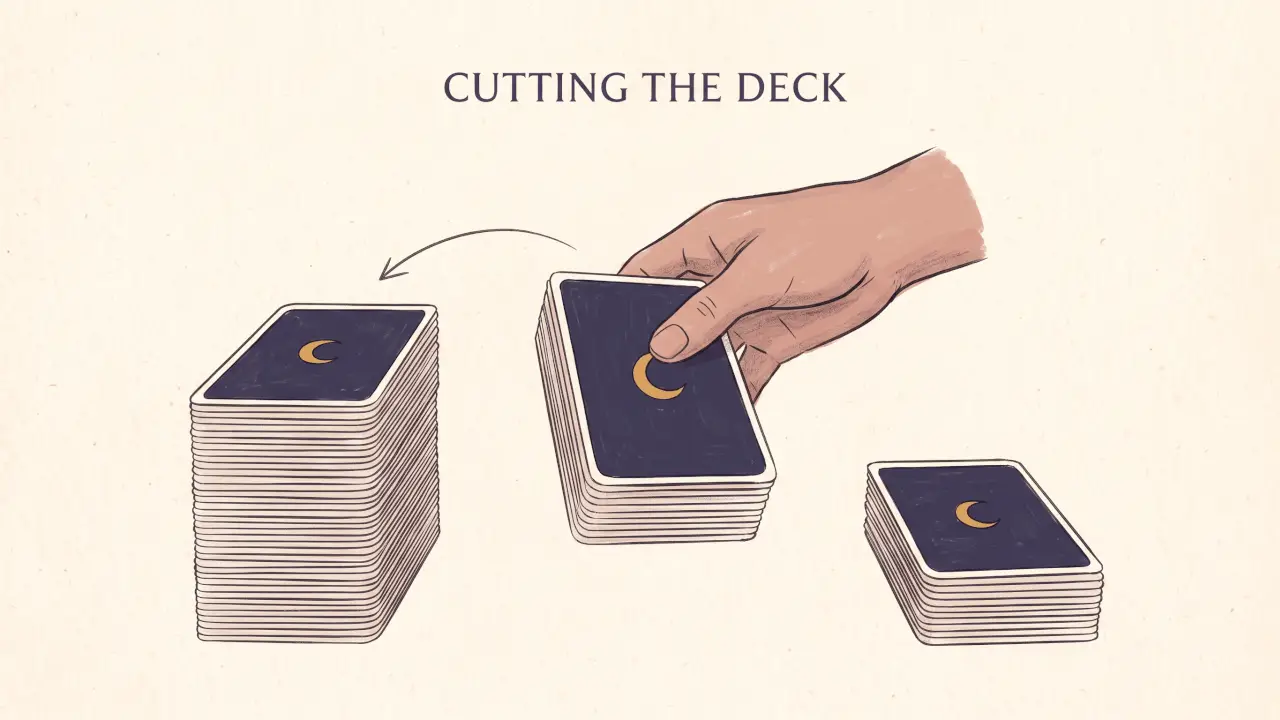
Hold the full deck, split it into two or three stacks, put the stacks back in a new order, and square the deck. It takes a few seconds and gives the reading a deliberate, ceremonial feel.
Why readers use a cut
A cut resets the deck after shuffling, helps the reader focus, adds variety to the mixing, and gives a clear starting point before you draw.
Spreading cards on a table
Spreading the cards face down on a table and mixing them by hand is sometimes called a wash. It is the gentlest method of all.
How to spread and mix the cards
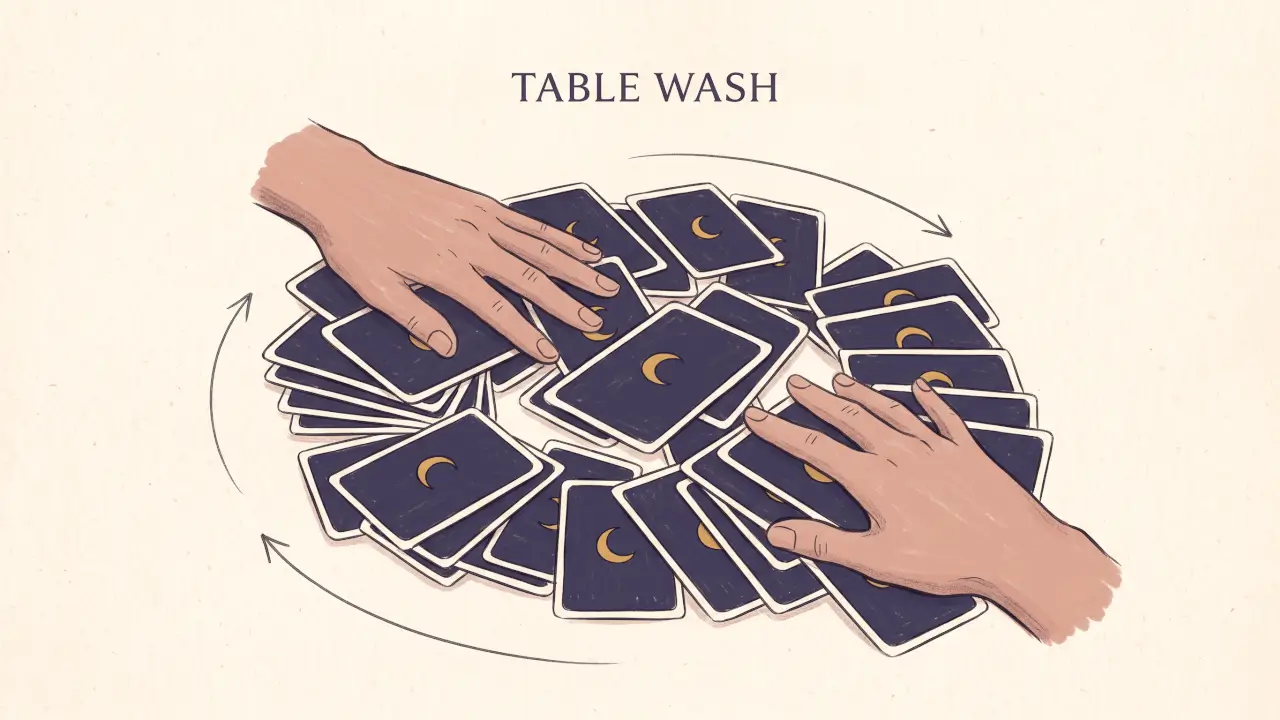
Place every card face down on a clean table. Move them around with both hands in circles until they feel well mixed, then gather them back into a deck. Nothing presses on the edges, and people who like a slower, more tactile process tend to prefer it.
When this method is useful
It suits large decks, cards you do not want to bend, and readings where you want to mix the deck openly in front of the querent. It needs more table space than the other methods.
Should you incorporate reversed cards?
A reversed card is one that comes up upside down. Some readers read reversals every time; others never do. Both are fine.
How to include reversals while shuffling
If you want reversals, let some cards turn upside down as you shuffle. The simplest way is to flip one section of the deck end over end partway through so that part of the deck ends up reversed. You can do the same when you cut or spread the cards. A reversed card can change the meaning, and readers who use them treat reversals as an extra layer of insight tied to fate and intuition. Whatever you choose, do not use a method that bends or warps the cards.
If you do not want reversals
Keep every card facing the same way while you shuffle and gather the deck. Decide before the reading whether you read reversals and stick to it. Consistency matters more than which choice you make.
What to do with cards that jump out
Sometimes a card slides or falls out of the deck mid-shuffle. Readers call these jumpers, and some treat a jumper as a message that belongs in the reading.
How to handle jumpers
You can set the card aside and read it as part of the spread, put it back and keep shuffling, or set it aside only when it feels clearly significant. There is no universal rule: some readers watch for jumpers, others ignore them unless one is hard to miss.
A simple way to decide
When a card jumps, pause and notice your reaction. Your first instinct will usually tell you whether it felt meaningful or was just a slip of the hand. If you read for other people, tell them beforehand how you treat jumpers.
Should the querent shuffle the cards?
The querent is the person getting the reading. Whether they shuffle depends on your style and comfort.
When the querent may shuffle
Let the querent shuffle when you want them involved in the reading, when you want them to put their own energy and focus into the deck, or when client participation is part of how you read.
When the reader may shuffle instead
Shuffle yourself when the deck is large or hard to handle, when you want to keep things simple, when you have a personal shuffling routine, or when the querent seems unsure about handling the cards. A common middle ground is to let the querent shuffle once and then take over, or to ask them only to cut the deck. Choose whatever supports the reading and feels respectful to both of you.
How to cleanse the deck
Some readers cleanse the deck before a reading. Cleansing resets the deck's energy, clears any negative energy left from the last reading, and helps you feel connected to the cards again.
When cleansing may be helpful
Cleanse when the deck is brand new, when you have not used it in a while, after a heavy or emotionally intense reading, or when cards that usually feel familiar suddenly feel distant. If cleansing is not part of your practice, skip it. Plenty of readers just shuffle and begin.
A simple intentional cleansing approach
Hold the deck fan-style and picture a ball of light around it. As you breathe and center yourself, imagine any excess negative energy falling out of the cards and grounding into the earth. Knocking three times on top of the deck, with intention, is another common step. You can keep cleansing as you shuffle. The point is to release the old energy so the deck holds new energy for the reading ahead.
Tips for beginners with oversized tarot decks
Oversized decks look good and are hard to handle. If you are new to tarot, pay attention to the deck's size and shape and how it sits in your hands. A deck that is awkward to shuffle may simply not flow with you. Take that seriously.
Choose gentle shuffling methods
For big cards, stick to the overhand shuffle, cutting, and spreading on a table. All three put little strain on the cards. Thick, sturdy stock can take a bit more; thin cards need a lighter touch.
Use both hands when needed
A large deck is hard to grip in one hand. Use two if that gives you control, or hold the cards fan-style so you can see the whole deck. Forcing a shuffle that does not fit your deck gains you nothing.
Keep the cards flat and supported
Do not bend oversized cards sharply. On a table, keep the surface clear and smooth. In your hands, support the deck evenly so cards do not slip.
Build your own routine over time
Shuffling with intention matters more than speed. Many readers keep a working deck for everyday use and a separate away deck for reading with others. Over time you will calibrate your decks, notice which cards you have a natural connection with, choose cards strategically when a spread calls for it, and learn to trust your intuitive senses. That does more for an intuitive reading than any rule.
Shuffling without a physical deck
If you are away from your cards or want to practice, Tarotap's online draw page shuffles a full 78-card deck on screen and fans it out so you pick the cards yourself, one to eight at a time. Reversals are a switch: with it on, each card has a 50% chance of landing reversed every time the deck is shuffled, and with it off every card comes up upright. You can also limit the deck to the 22 Major Arcana. Turn on Skip the Question and the page does nothing but shuffle and draw, which suits journaling or practice. Leave it off and you can ask about the cards you pulled and get a free reading.
Common mistakes to avoid
- Forcing a shuffle that hurts your hands or damages the cards.
- Shuffling with no intention in mind, which makes the process feel scattered.
- Overhandling thin or delicate cards until they wear or warp.
- Changing method every time, so you never settle into a rhythm.
Final thoughts
Start with one simple method, keep the question clear, and decide before you begin how you will treat reversals, jumpers, and cleansing. With practice the technique stops needing attention, and the shuffle becomes the part of the reading where you settle in.