

Celtic Cross Tarot Spread
The Celtic Cross works well for complex questions or general life check-ins
What Is the Celtic Cross Spread?
If you've spent any time with tarot, you've probably seen this one. Ten cards arranged in a cross with a vertical line beside it. It looks complicated at first—and honestly, it can be—but that's also what makes it useful.
The Celtic Cross doesn't give you a quick answer. It shows you the mess: what's happening now, what got you here, what you're afraid of, what you're hoping for. Sometimes that's exactly what you need—not a simple yes or no, but a way to see the whole picture.
Origins of the Celtic Cross
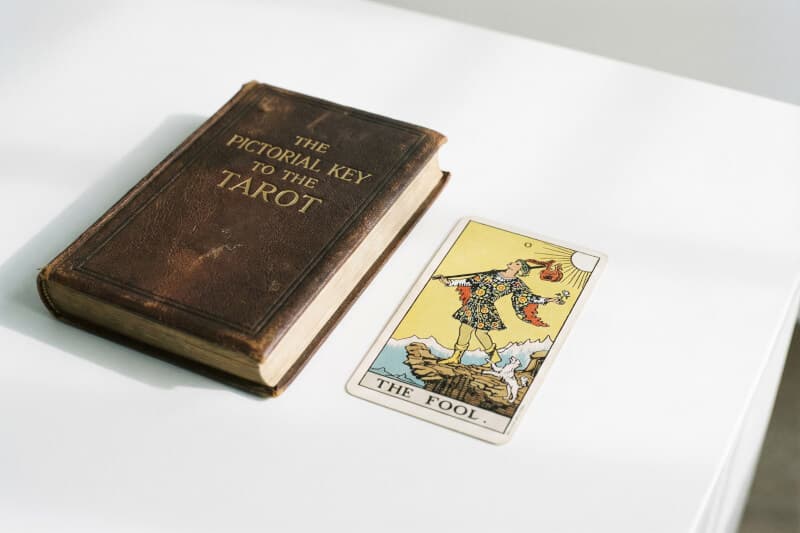
Despite its name, the Celtic Cross spread has no direct connection to ancient Celtic traditions. Arthur Edward Waite, a member of the Hermetic Order of the Golden Dawn, popularized this layout in his 1910 book "The Pictorial Key to the Tarot." He published it alongside the iconic Rider-Waite-Smith deck.
Waite's version drew from earlier esoteric practices and adapted them into a structured reading method. Over the past century, readers have developed countless variations, but the core framework—a cross overlaid with a staff—remains the standard.
The 10 Card Positions Explained
Each position asks a different question of the card that lands there. The spread has two parts: the cross (positions 1 to 6) is the situation seen from four sides, and the staff (positions 7 to 10) is you inside that situation, read from the bottom up.
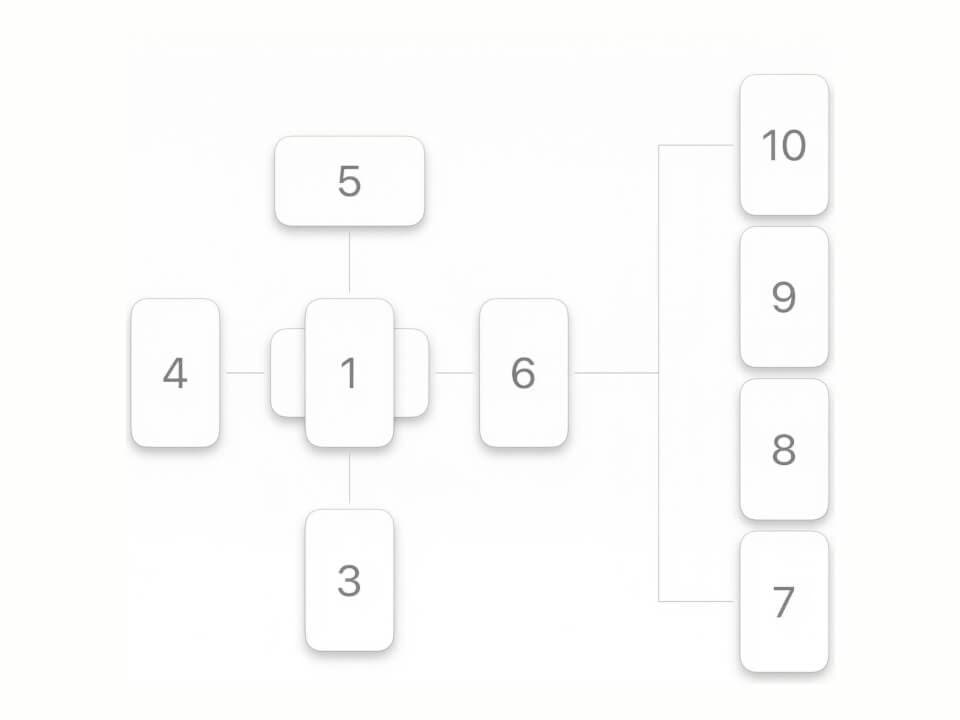
The Cross – Your Present Situation
The Present
The situation as it stands today, and your state of mind inside it. Read this card neutrally before you look at anything else: it is the matter itself, not you and not the ending. Every other card in the spread is read against it.
The Challenge
Laid across card 1, this is what cuts through the situation right now. In this position the card is always a challenge, even when the card itself is a happy one: a pleasant card here names a good thing that is complicating the matter. Read cards 1 and 2 as one sentence.
The Foundation
Below the centre: what the situation grew out of. Old experience, a belief you hold without noticing, a motive you have not said out loud. This card often surprises people, because it names the part of the story they stopped looking at.
The Recent Past
To the left: what is just passing out of the picture but still has a hand on it. If a card you keep drawing in other readings turns up here, say so; it is usually the thread that explains the present.
The Crown
Above the centre: what you are consciously aiming for, or the best that can come of the matter as you currently see it. Compare it with card 10 later. When the two agree, your effort is working; when they differ, that gap is the most useful thing in the reading.
The Near Future
To the right: the next turn in the road, weeks rather than years. This is where the cross ends and the staff begins. Keep it small: card 6 is the next scene, and card 10 is the ending.
The Staff – The Path Forward
Yourself
The bottom of the staff: how you are showing up to this, as you actually are rather than as you would like to be. Your posture, your attitude, the role you have taken on.
Environment
The people, circumstances and pressures around the matter that you did not choose and cannot fully control: family, work, money, the mood of the people involved. Waite called this card "his house".
Hopes and Fears
Deliberately double. What you most want from this is often the same thing you are braced against, which is why this card is the hardest in the spread to read. Decide which of the two the card is speaking as, then check it against card 10.
The Outcome
Where the situation lands if the energy in the other nine cards continues unchanged. It is a direction, not a verdict. A hard card here is an invitation to look back at cards 2, 7 and 9 for what could change the course.
How to Read the Celtic Cross
Reading guide
How the ten cards fit together
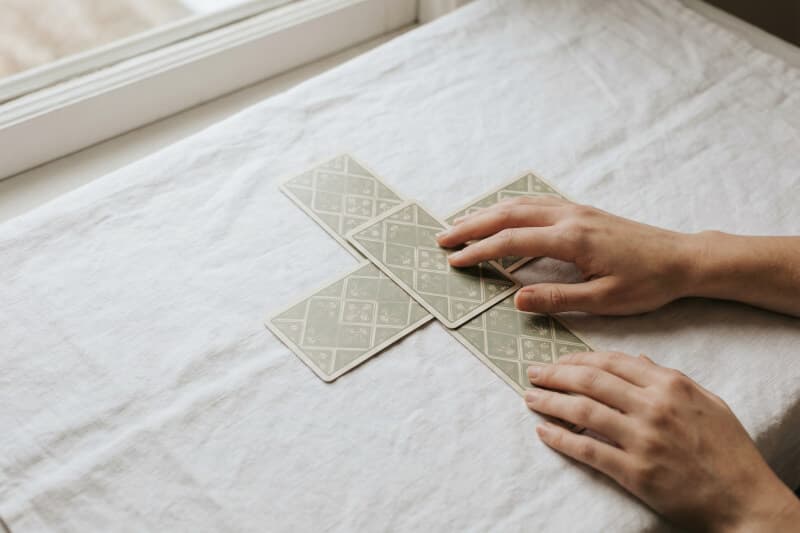
The Celtic Cross is two shapes laid side by side, and each shape has its own grammar. Once you can see the shapes, the ten cards stop feeling like a list you have to memorize.
Time line. Card 4 is what you are coming from, card 6 is the next turn in the road. Does 6 continue the motion of 4, or break it?
The cross and the staff
Cards 1 to 6 form the cross: the situation itself, seen from four sides. Cards 7 to 10 form the staff on the right: you inside that situation, read from the bottom up. A good reading moves through the cross first, then climbs the staff, then holds the two side by side.
The heart of the spread: cards 1 and 2
Card 1 is the situation as it stands. Card 2 lies across it and shows what cuts through the situation right now. Read them as a single sentence: "the situation is this, and what complicates it is that." Everything else in the spread orbits this pair, so get it right before you move on.
One rule about card 2 trips up almost every new reader. In this position the card is always a challenge, even when the card itself looks pleasant. The Ten of Cups crossing a career question says that the pull toward home and comfort is what makes the decision hard. Waite put it the same way in 1910: a favourable card here means the opposition is not serious, "or it may indicate that something good in itself will not be productive of good in the particular connexion."
The time line: 4, 1, 6
Read the cross horizontally. Card 4, the recent past, is what you are coming from. Card 6, the near future, is the next turn in the road; the destination is card 10. The question to ask is whether card 6 continues the motion of card 4 or breaks it.
The depth line: 3, 1, 5
Now read it vertically. Card 3, below the centre, is the foundation: what the situation grew out of, often something you have not said out loud. Card 5, above, is the crown: what you are consciously aiming for. When 3 and 5 agree, you want what your roots want, and the path is clear. When they disagree, the reading has found its real subject.
The staff, bottom to top: 7, 8, 9, 10
Card 7 is how you are showing up to this. Card 8 is the room you are in: the people and circumstances you did not choose. Card 9, hopes and fears, is deliberately double, because we usually hope for and fear the same thing. Card 10 is where the current motion lands. Read upward and the staff tells one story: this is who I am in it, this is what surrounds me, this is what I am braced for, this is where it is heading.
Six pairs that carry the reading
These comparisons are what the ten cards are for. Once the cards are down, go through them in this order. They are also the checks our reading engine runs on every draw made on this page, so the written reading you get follows the same route.
- 1+2
Read as one unit
The situation and what crosses it. If you can state these two as a single sentence, the rest of the reading has a spine. If you cannot, slow down here.
- 5↔10
The aim and the landing
Card 5 is where you are pointing. Card 10 is where the road goes if nothing changes. When they line up, your effort is working. When they pull apart, the gap between them is what the reading should talk about.
- 6↔10
The next step and the end
Does the near future feed the outcome or derail it? A rough card 6 under a calm card 10 is a passage. A calm card 6 under a harsh card 10 means something you cannot see yet is still on its way.
- 9↔10
The hope, the fear, and which one wins
Card 9 holds both a hope and a fear. Card 10 vindicates one of them. Say which, plainly. Readers who skip this step leave the querent holding both.
- 7↔1
How you meet the situation
A stable card 1 with a chaotic card 7 means the instability is coming from inside. A turbulent card 1 with a grounded card 7 means you have more resource than you feel.
- 7↔8
You and the room
Are you and your surroundings pulling the same way? A withdrawn card 7 next to a warm card 8 usually means help is available and going unused.
Then write the whole thing as one paragraph that answers the question. If you cannot say the answer in two sentences, you have not finished reading.
Reversed cards, position by position
Reversals do not need a separate rulebook for this spread. A reversed card usually means the energy of the card is blocked, turned inward, or arriving late. What changes is what that means in each position.
- 1the situation is stuck, or it is happening inside you more than around you.
- 2the obstacle is internal. Nobody is standing in your way except a habit.
- 3a foundation you have not admitted to yourself. Expect a surprise here.
- 4a past that has not finished leaving.
- 5an aim you are not sure you want, or one you have been told to want.
- 6delay. The next step is coming, slower than you would like.
- 7you are not showing up as yourself.
- 8the environment is working against you quietly rather than openly.
- 9the fear is louder than the hope. Read the card as the fear first.
- 10the outcome arrives late, or in a shape you will not recognise at first.
Waite's original order, and why guides disagree
When Arthur Edward Waite published this layout in The Pictorial Key to the Tarot in 1910, he called it "an ancient Celtic method of divination" and gave the ten positions phrases rather than names. In his own words, in order: this covers him, this crosses him, this crowns him, this is beneath him, this is behind him, this is before him, himself, his house, his hopes or fears, and what will come.
Two things in Waite's version surprise modern readers. First, he began with a Significator, a court card chosen to stand for the person asking, with card 1 laid over it. Second, his numbering differs from the one most guides use today. His card 3 went above the centre and his card 4 below, and in his diagram the past sits on the right and the future on the left, because the cards followed the direction the Significator was facing. The books that carried the spread to a mass audience in the 1960s and 1970s renumbered the arms, and the numbering has drifted ever since. That is why two guides can both be faithful to the tradition and still disagree about which card is the past.
This page uses the order most online readers learn now: 3 below, 4 on the left, 5 above, 6 on the right. Our main reading table keeps Waite's numbering for cards 3 to 6. The meanings are the same in both; only the numbers move. Pick one order and keep it, and the spread will work.
| Place in the cross | Waite, 1910 | This page |
|---|---|---|
| Centre | 1, this covers him | 1, the present |
| Across the centre | 2, this crosses him | 2, the challenge |
| Above | 3, this crowns him | 5, the crown |
| Below | 4, this is beneath him | 3, the foundation |
| Behind (the past) | 5, this is behind him | 4, the recent past |
| Before (the future) | 6, this is before him | 6, the near future |
Waite's own clarifier
If the tenth card was too ambiguous to settle the matter, Waite's advice was to shuffle again and lay a second cross using that tenth card as the Significator. A court card in position 10 meant the matter would end up in the hands of a person like that card. Modern readers draw a single clarifier card instead. One is plenty; a clarifier for every position is a way of avoiding the card you did not like.
A worked example
The cards below are a made-up draw, chosen to show the method. The question is one we see often: "A close friend and I fell out badly last month. Can this be repaired, and what do I need to understand first?"
- 1, the present: Five of Cups
- 2, the challenge: Knight of Swords
- 3, the foundation: Three of Cups
- 4, the recent past: Five of Wands
- 5, the crown: Temperance
- 6, the near future: Eight of Swords
- 7, yourself: The Hermit
- 8, environment: Queen of Cups
- 9, hopes and fears: Three of Swords
- 10, the outcome: Six of Cups
Start with the heart. The Five of Cups covered by the Knight of Swords: grief over what was lost, crossed by the urge to fire off one more sharp message and settle it fast. Along the time line, the Five of Wands behind it is the argument itself, and the Eight of Swords ahead is a stretch of feeling stuck, unable to reach out, if nothing changes. On the depth line, the Three of Cups below says the foundation is a real friendship with history, and Temperance above says the aim is repair, slowly and in balance. Roots and aim agree, so the question is how to repair it.
Now the staff. The Hermit at the bottom: you have withdrawn to think, which is honest but has gone on a while. The Queen of Cups above it: someone in your circle, maybe the friend, maybe a third person, is ready to listen if given room. The Three of Swords in hopes and fears is the fear that it is already broken for good. The Six of Cups at the top is a return to old warmth.
Hold the pairs together. The crown and the outcome agree: repair is where this is heading. The near future and the outcome disagree, so the stuck stretch is a passage. Hopes and fears against the outcome: the outcome vindicates the hope. The Hermit next to the Queen of Cups says help is in the room and going unused. The answer in two sentences: it mends, but not by the fast route. Put the Knight of Swords down, let the Queen of Cups do the talking, and give it the slow month Temperance asks for.
What is free here, and how the reading is written
You can draw a full ten-card Celtic Cross on this page once a day without an account. The cards, their positions and the overview of the reading are shown to everyone. The three detailed sections, the cross, the staff and the synthesis, are part of membership.
The written reading is produced by an AI reader that receives your question and the ten cards with their positions and orientations. It is told to read the cross as one flowing paragraph, the staff as another, and then give specific advice, in the same order this guide follows, and to describe the situation instead of reciting card meanings. Treat the outcome card the way this guide does: as where things are heading if nothing changes.
Sources and further reading
- •Arthur Edward Waite, The Pictorial Key to the Tarot (1910), Part III, section 7, "An Ancient Celtic Method of Divination". Public domain; the quotations above are from this text.
- •Eden Gray, A Complete Guide to the Tarot (1970). The retelling that brought the spread to a wide American readership.
- •Rachel Pollack, Seventy-Eight Degrees of Wisdom (1980). The standard card-by-card commentary on the Rider-Waite-Smith images, with a chapter on reading the Celtic Cross.
- •Mary K. Greer, Tarot for Your Self (1984). The book that reframed the spread as a tool for self-reading rather than prediction.
Written by the Tarotap team. The pair checks in this guide are the ones our reading engine applies to every Celtic Cross drawn here. Last updated October 2026.
When to Use the Celtic Cross
This spread works best for:
- •Complex situations with multiple factors at play
- •Questions about relationships, career turning points, or major life decisions
- •Times when you need to understand the full picture before acting
- •Self-reflection and understanding your own patterns
Tips for Better Readings
Frame Your Question Clearly
Vague questions lead to vague answers. Instead of "What about my love life?" try "What do I need to understand about my current relationship dynamics?"
Read Reversals Thoughtfully
Reversed cards can indicate blocked energy, internal rather than external expression, or areas needing attention. Develop a consistent approach.
Consider Card Interactions
A positive card in the outcome position means less if the approach card shows self-sabotage. Cards don't exist in isolation.
Journal Your Readings
Recording your Celtic Cross readings over time reveals patterns in your life and helps you track how situations evolved compared to what the cards suggested.
Frequently Asked Questions
How long does a Celtic Cross reading take?
A thorough interpretation typically takes 20-30 minutes. Rushing through the positions defeats the purpose of this comprehensive spread.
Can beginners use this spread?
Yes, as long as you know the basic card meanings first. If you are new, start with a three-card spread, then come back to the Celtic Cross once reading three cards as one story feels natural.
What if the outcome card is negative?
Remember: the outcome shows where things are heading if nothing changes. Use the other cards—especially positions 7-9—to identify what shifts could alter the trajectory.
Should I use the full deck or just Major Arcana?
Use the full 78 cards. Minor Arcana provide crucial detail about everyday situations, while Court Cards often represent specific people or personality aspects.
How often should I do a Celtic Cross reading?
For the same question, wait at least a few weeks. For general life check-ins, monthly readings work well. Doing this spread too frequently on the same topic creates confusion.
Which Celtic Cross order is correct?
None of them is wrong. Waite's 1910 numbering put card 3 above and card 4 below; most modern guides, including this page, put 3 below, 4 on the left, 5 above and 6 on the right. The positions keep their meanings in every version. Choose one order, learn it, and stay with it.
Do I need a Significator card?
Waite started every reading by choosing a court card to represent the person asking, then laid card 1 over it. Most readers today skip this, and this page does not use one. If you like the ritual of it, choose the card before you shuffle and set it aside; it does not change how the ten positions are read.
Celtic Cross or a three-card spread?
Use the Celtic Cross when the question has several moving parts and a three-card draw would flatten it. Use three cards for a single, clear question or a daily check-in. For a plain yes or no, neither is the right tool; the yes or no tarot is built for that.
Master the Celtic Cross
The Celtic Cross remains the gold standard of tarot spreads for good reason: it balances depth with structure, giving you a complete view without overwhelming complexity. Whether you're reading for yourself or others, mastering this layout opens the door to genuinely insightful tarot practice.
Tarot Spreads
All tarot spreadsHorseshoe tarot spread
Seven cards in a U shape, read from the past to the outcome, with hidden influences, you, others and advice in between.
Two Options Spread
Torn between two choices? This spread reveals the energy and outcomes of each path to guide your decision.
Three Options Spread
Facing three different paths? This spread illuminates the potential of each choice to help you find clarity.
Tarot Fortune
 2026
20262026 Tarot Annual Fortune Reading
2026 Tarot Annual Fortune Reading
Gain insight into your fortune trends for the coming year through tarot cards. The annual tarot reading provides you with a long-term perspective, helping you plan for the future, seize opportunities, and face challenges.
View Annual Fortune
Year Ahead Reading
A month-by-month tarot timeline: one theme card plus a card for each of the next 12 months. See how your year unfolds and which months are your key turning points.
Seasonal Spread
Limited-edition reading available only during the four solar terms. Five cards reveal spiritual lessons, vitality, relationships, mental clarity, and fortune for the coming quarter.
Monthly Tarot
Draw three cards for early, mid, and late month guidance
Daily Tarot Fortune
Explore today's tarot guidance and unveil your destiny's path. One card each day to gain insight into life's mysteries.
More to Explore
Quick readings and tools for different moments
Free AI Tarot Reading
Seven AI tarot readers, instant guidance on love, career, and life decisions.
Yes or No Tarot
Need a quick answer? Ask a yes-or-no question and let the cards decide.
Love Tarot
Curious about their feelings? Get clarity on love, attraction, and where things are headed.
Career Tarot
Your job, an interview, a change: ask the cards about work and read an answer written for your question.
Draw Tarot Cards
Pull cards freely and explore their meanings at your own pace.
Draw an Oracle Card
Pick an oracle deck, hold a question, and draw a single card for clarity.
Tarot Manifestation
Set intentions with tarot as visual anchors. Daily focus turns goals into reality.
Chat with Raven
Talk to the mystical artist of the Moonlight Tower. He listens and paints a card for your moment.
Chat with Luna
A warm tarot apprentice who listens beneath the starlight. Find your inner answers.
Free AI Tarot Reading Online
Get a free AI tarot card reading online. Pick your spread, pull your cards, and see what comes up.