

Tarot cards are real objects with a real history, and a reading can be genuinely useful. What they are not is a way to see the future. No controlled research has shown that a tarot spread predicts specific events better than chance, and the cards themselves are printed cardstock. The useful part of tarot happens in the person looking at them.
We build a tarot app, so we have an obvious interest in the answer. That is exactly why we would rather give you the honest version than the flattering one. If you decide tarot is nonsense after reading this, fine. If you decide to try it, you will at least know what you are trying.
"Real" hides three different questions
When someone asks whether tarot cards are real, they usually mean one of these:
- Do the cards have some power of their own?
- Can a reading predict what will happen?
- Is a reading worth anything at all?
The answers are no, no, and yes. Most of the arguments online come from people answering different questions and thinking they disagree.
What tarot cards actually are
Tarot started in northern Italy in the fifteenth century as a deck for a trick-taking card game, and a version of that game is still played in parts of Europe. The decks were not designed for divination. Reading fortunes with them became fashionable in France in the late eighteenth century, and the deck most people picture today, with its illustrated minor cards, was published in 1909.
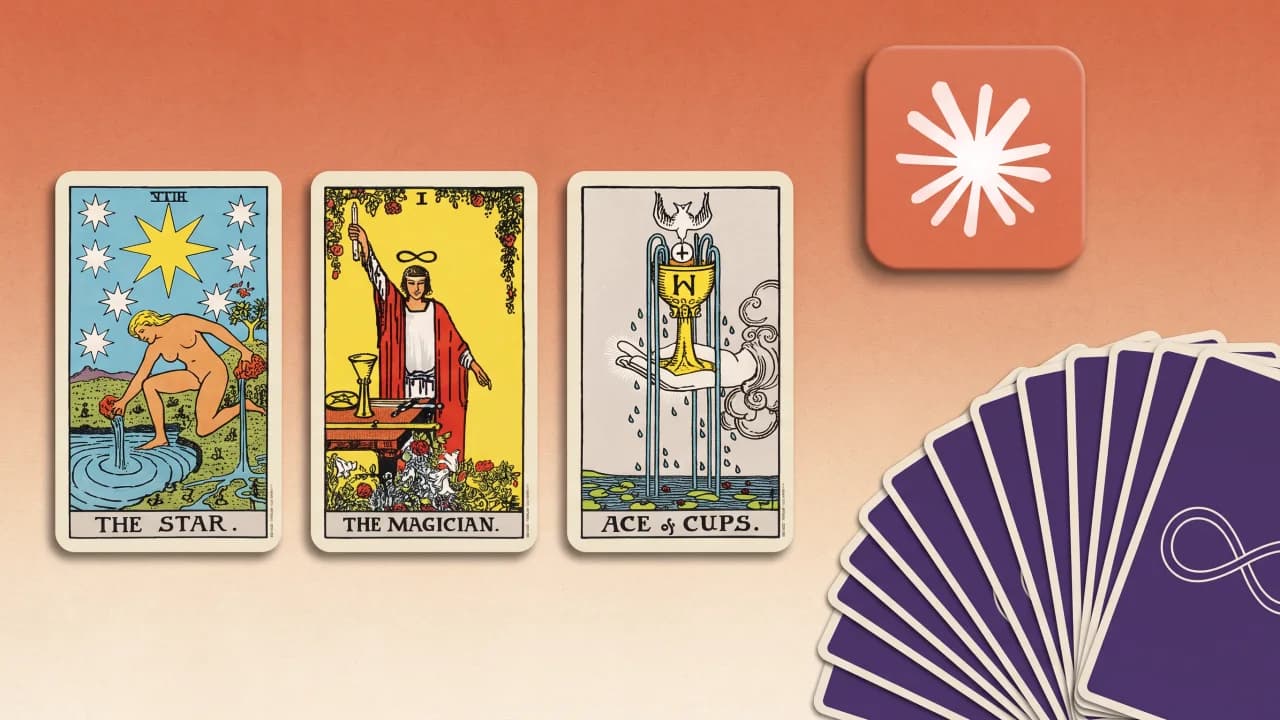
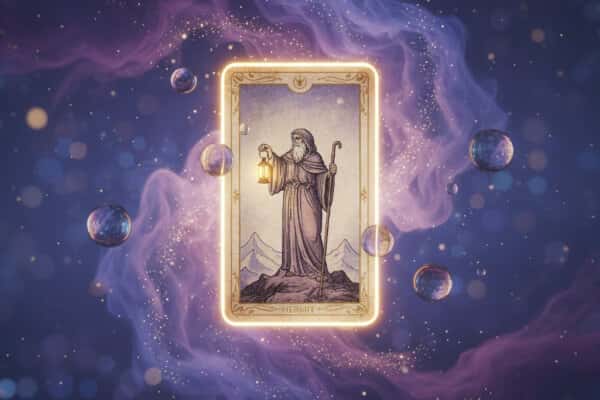
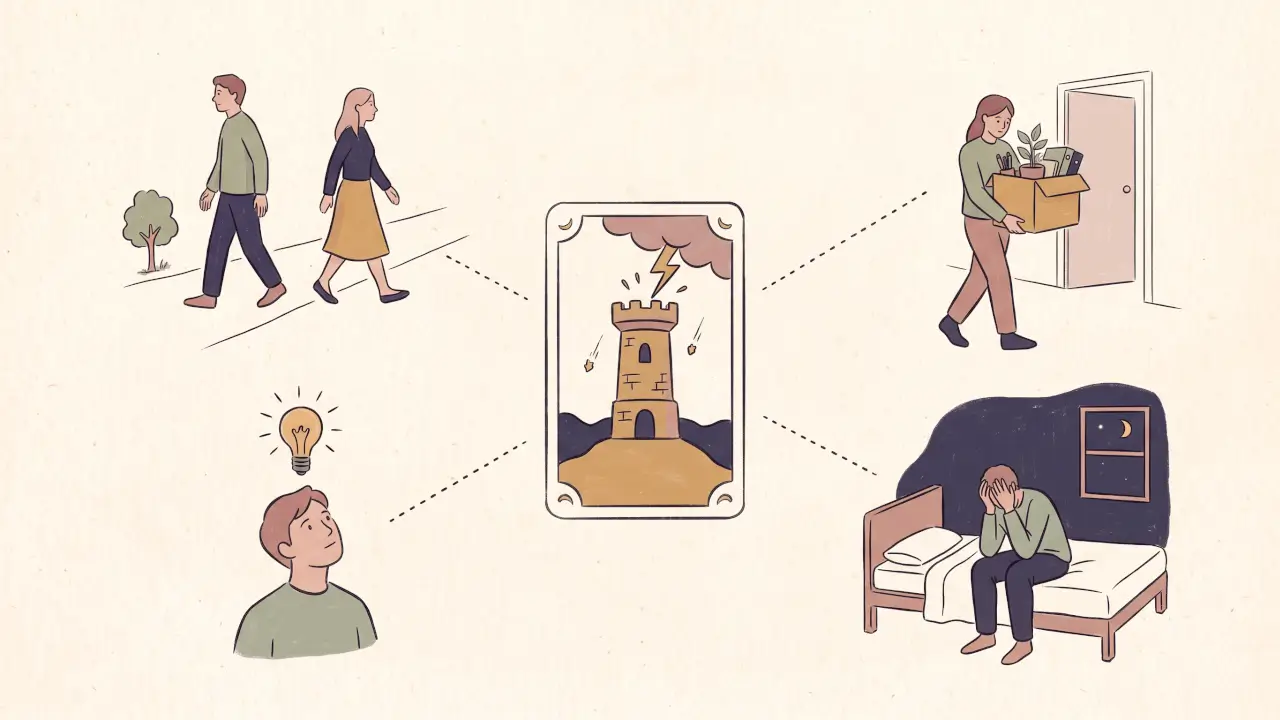
A standard deck has 78 cards: 22 Major Arcana such as The Fool, Death and The Tower, and 56 Minor Arcana in four suits. Each card has a cluster of meanings attached to it by a century of books and teachers. Those meanings are broad on purpose. The Tower can be a breakup, a layoff, a health scare or a sudden change of mind. That breadth is the single most important fact for understanding why tarot feels the way it does.
Can tarot predict the future?
There is no body of controlled research showing that tarot predicts outcomes, and no mechanism anyone has proposed by which it could. The deck is shuffled at random, and a random card cannot carry information about your next six months.
Some readers would argue that this misses the point, and that prediction was never the job. We agree with the second half. But if the question is literally "will my ex come back by March," tarot cannot answer it, and anyone who tells you otherwise with confidence is either mistaken or selling something.
Why tarot still feels so accurate
Scroll any tarot forum and you will find the same post again and again: a beginner pulls three cards for a friend, the cards describe the friend's situation uncannily well, and the beginner is a little shaken. The feeling is real. The explanation is mostly ordinary.
The cards describe everyone. Psychologists call this the Barnum effect. In a 1948 experiment, students rated a personality sketch as highly accurate for themselves, though every one of them had been handed the same text. Tarot meanings are written at the same level of generality. "A relationship that is not giving you what you need" applies to most people on most days.
You do the matching. A spread does not tell you what it means. You look at the Three of Swords, think about your week, and find the thing it fits. Your mind is very good at this and does it without asking permission. People who learn tarot often say their readings got "more accurate" with practice, which is exactly what you would expect if the accuracy lives in the interpreter.
You remember the hits. The reading that nailed it gets retold. The one that said nothing useful is forgotten by Tuesday.
The reader reads you. In a face-to-face reading, your clothes, your voice, your reaction to each card and the question you chose to ask all carry information. A perceptive reader uses it, often without meaning to.
Readings change behaviour. If a card tells you the job interview will go well, you may walk in calmer and do better. The card did not know anything. It changed how you acted, and then it looked right.
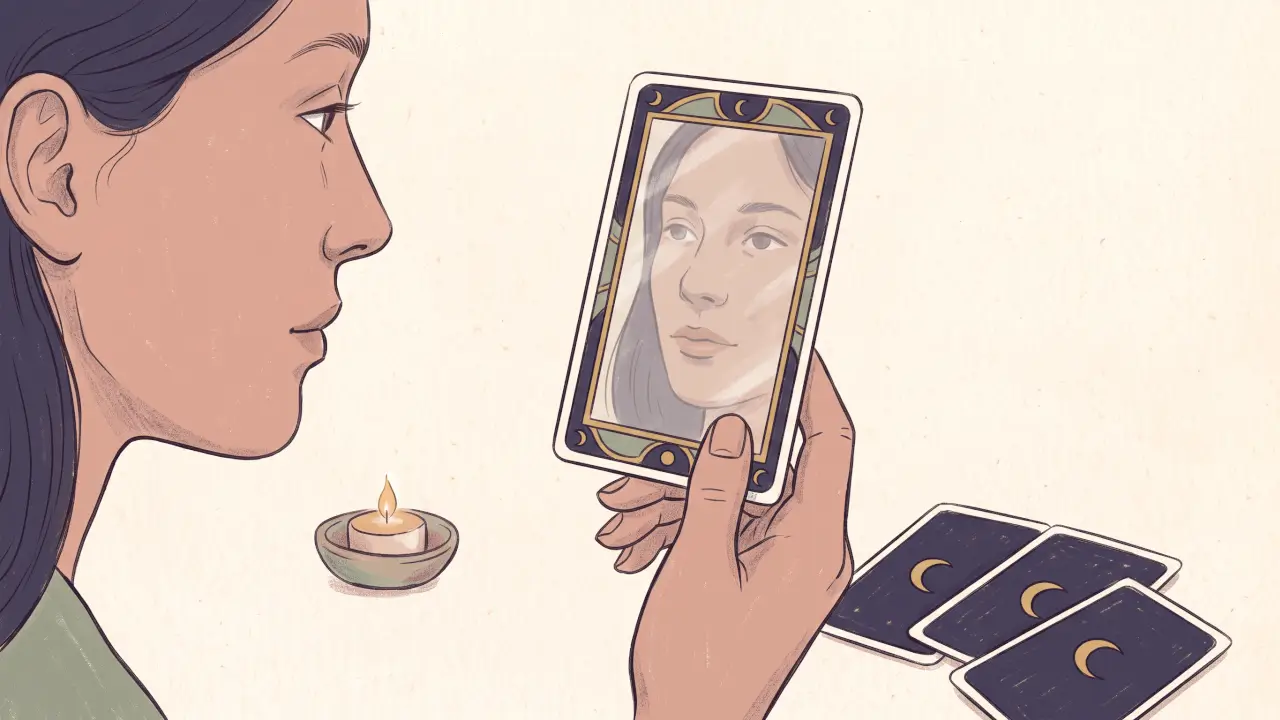
Tarot is a mirror. A mirror is worth having, as long as you know it is one.
What tarot is actually good at
Strip away prediction and a fair amount remains.
Structured reflection. A spread is a set of questions in a fixed order: what is the situation, what is working against you, what are you not seeing, what could you do. Most of us never sit down and ask ourselves those questions in sequence. Tarot makes you.
Naming the thing you already half know. People often say the cards told them what they already knew, and say it as a complaint. Hearing a thought stated plainly from outside your own head changes how you treat it, which is why the complaint is also the point.
A pause before a decision. Shuffling, laying out cards and sitting with them takes a few minutes. For a lot of people that pause is the only slow moment in the day, and decisions made after it tend to be less reactive.
Prompts for journaling and creative work. Writers and artists use tarot as a random prompt generator with better art than a dice roll. The 78 cards cover almost every human situation, so whatever you draw gives you something to push against.
A reading that does these things is "real" in every way that matters to the person doing it. The benefit does not depend on where you think the cards came from.
The spiritual view, for those who hold it
Many readers see tarot differently. Some believe a higher power, the universe or their own intuition guides which cards appear. Others follow Carl Jung, who proposed that humans share a collective unconscious of archetypes and who was interested in meaningful coincidence, which he called synchronicity.
We are not going to tell you that view is wrong. It is a belief, and beliefs are not settled by a blog post. What we will say is that the practical advice in this article is the same whichever view you hold: ask good questions, take responsibility for your choices, and do not let a card make a decision for you.
The reader matters more than the deck
A line from one tarot forum puts it well: the cards are never accurate or inaccurate on their own, the reader is. The same three cards in front of a thoughtful, experienced reader and in front of someone who learned the keywords last week will produce two very different readings.
That cuts both ways. A good reader can give you a useful hour of reflection. A bad one, or a dishonest one, can take your money or frighten you. Red flags that come up constantly in forum threads:
- Anyone who tells you that you have a curse, a block or an attachment that they can remove for a fee.
- Anyone who contacts you first, especially on social media, offering a reading you did not ask for.
- Readings that create fear or dependency, where you are told you must come back or something bad will happen.
- Someone marketing themselves mainly as a psychic rather than a tarot reader. Psychic ability is not required to read tarot, and claiming it is a sales technique more often than not.
A reader who is worth your time will say "I don't know" sometimes, will hand the interpretation back to you, and will not need you to believe anything in particular.
Love, career and timing
Most tarot questions are about relationships and work, and this is where expectations go wrong most often.
Tarot is reasonably good at questions shaped like "what am I not seeing in this relationship" or "what is making this job feel wrong." It is poor at "will he text me" and useless at "when." Timing in tarot is a set of loose conventions, and readers disagree about them. If a reading gives you a date, treat it as decoration.
A useful habit: before you pull a card, rewrite your question so that the answer is something you could act on. "Should I take the job" becomes "what would I be giving up if I took the job." The second question gets a better reading from any deck, and from any reader.
Are tarot cards evil or dangerous?
This is a separate question that often gets tangled with the first one. Some religious traditions prohibit divination of any kind, and if you belong to one, that is a matter for your own conscience and your community, not for us.
Outside that frame, the cards are cardstock. There is no mechanism by which shuffling a deck invites anything into your home. The real risk with tarot is the same as with horoscopes or any other reflective tool: using it to avoid decisions, pulling cards compulsively until you get the answer you wanted, or paying for readings you cannot afford. If tarot is causing anxiety instead of relieving it, stop for a while.
How to try tarot without fooling yourself
If you are curious and want a fair test, a few rules keep you honest:
- Write the question down before you shuffle, and do not change it after you see the cards.
- Write what each card means to you before you look anything up. Then compare.
- One pull per question. If you re-draw until the cards agree with you, you have learned nothing.
- Treat an "outcome" card as one possible direction, not a verdict.
- After a month, read back through your notes. Notice which readings changed what you did. That is the only accuracy that matters.
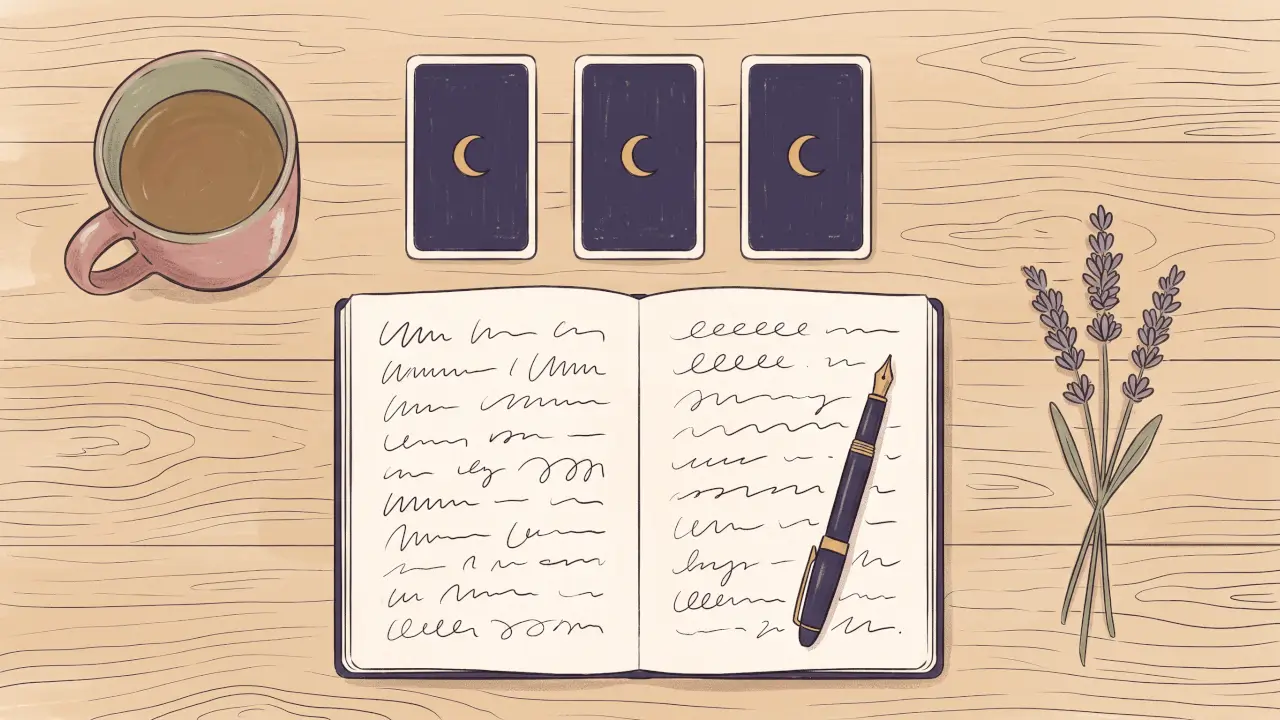
You do not need to buy a deck for this. Our online draw page shuffles a full 78-card deck on screen and fans it out so you pick the cards yourself, one to eight at a time. Turn on Skip the Question and it does nothing but shuffle and draw, which works well with a notebook. Leave it off and you can ask about the cards you pulled and get a free reading. If you are wondering how an AI reading compares to a human one, we wrote about that separately in Is AI Tarot Accurate?. For better questions to start with, see our list of tarot questions.
Frequently asked questions
Are tarot cards accurate? As a description of what you are already feeling, often yes. As a forecast of events, no better than chance. The accuracy people notice comes from the breadth of the card meanings and from their own interpretation.
Do tarot cards work? They work as a tool for reflection and decision framing. They do not work as a source of information you could not otherwise have.
Is tarot scientifically proven? No. There is no accepted scientific mechanism for prediction by cards and no controlled study showing it. The psychological effects of the practice, such as reflection and a calmer moment before a decision, are real and unremarkable.
Are online or app readings less real than in-person ones? The shuffle is random either way. What differs is the interpretation and whether anyone is reading your face. An online draw with your own notes removes the reader's influence entirely, which some people prefer.
Where we land
Tarot cards are real. Tarot's predictive power is not. The value of a reading is the thinking it makes you do, and a skeptic can get that as easily as a believer, provided the decision stays with you.